
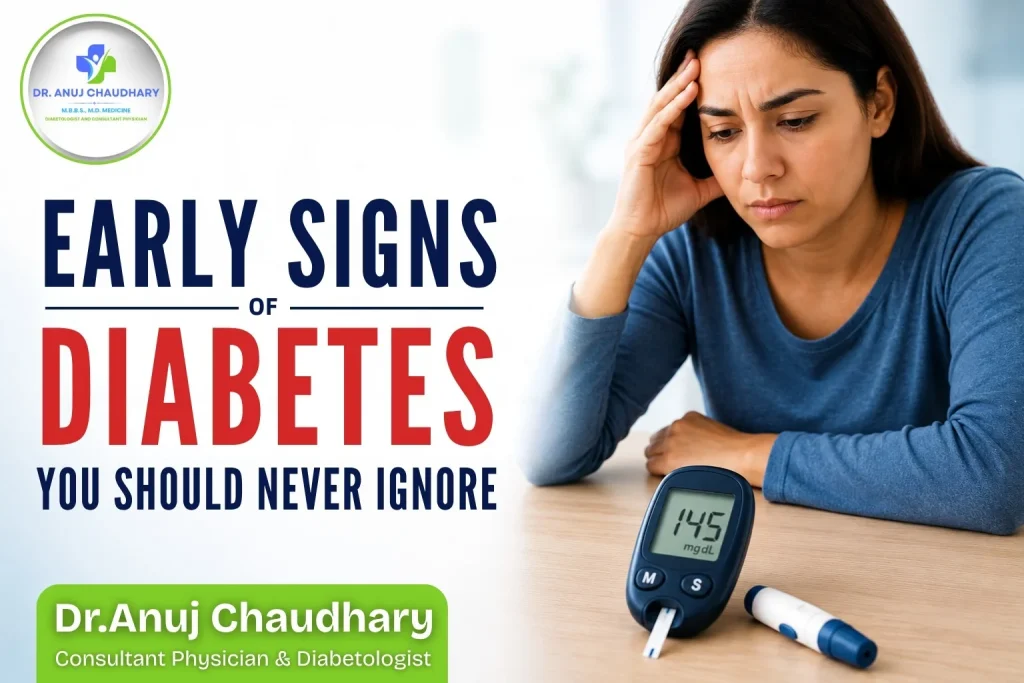
Diabetes is a growing health concern, and early detection can make a significant difference in managing the condition effectively. As a leading Best Diabetologist in Ghaziabad and General Physician & Diabetologist in Ghaziabad, Dr. Anuj Chaudhary emphasizes the importance of recognizing subtle symptoms before they escalate into serious complications. Many people overlook initial signs, attributing them to stress or lifestyle factors, but timely awareness and consultation can help prevent long-term issues.
Understanding Diabetes and Its Impact
Diabetes occurs when the body cannot properly regulate blood sugar levels, either due to insufficient insulin production or ineffective use of insulin. Type 2 diabetes, the most common form, often develops gradually, while Type 1 can appear more suddenly. Ignoring early signs may lead to complications affecting the heart, kidneys, eyes, and nerves.
Common Early Signs of Diabetes
1. Increased Thirst and Frequent Urination
One of the classic early indicators is excessive thirst (polydipsia) paired with frequent urination (polyuria). High blood sugar forces the kidneys to work overtime to filter excess glucose, drawing more fluid from the body. This cycle leads to dehydration and constant thirst.
2. Unexplained Fatigue and Weakness
Persistent tiredness, even after adequate rest, is common. When cells cannot absorb glucose properly for energy, the body feels drained. This fatigue can interfere with daily activities and is often dismissed as overwork.
3. Blurred Vision
High blood sugar can cause fluid to shift into the eye lenses, altering their shape and leading to blurry vision. While temporary, persistent changes warrant immediate attention to prevent long-term damage.
4. Slow-Healing Sores and Frequent Infections
Cuts, bruises, or minor wounds that take longer than usual to heal are red flags. Elevated glucose impairs blood circulation and immune response, making infections—such as skin, gum, or urinary tract infections—more common and harder to resolve.
5. Unexplained Weight Changes
Sudden weight loss, despite normal or increased eating, can occur in Type 1 diabetes as the body breaks down fat and muscle for energy. In Type 2, gradual weight gain may precede diagnosis due to insulin resistance.
Tingling, Numbness, or Pain in Hands and Feet
Peripheral neuropathy—tingling or numbness in extremities—can appear early, especially in Type 2 diabetes, due to nerve damage from prolonged high sugar levels.
Other Warning Signs to Watch For
– Increased Hunger: Cells starving for energy may trigger constant hunger (polyphagia).
– Dry Mouth and Itchy Skin: DShastri Nagar,ehydration and poor circulation contribute to these issues.
– Recurrent Yeast Infections: Particularly noticeable in women due to elevated sugar fostering yeast growth.
Risk Factors and When to Seek Help
Certain factors increase susceptibility, including family history, obesity, sedentary lifestyle, age over 45, and conditions like hypertension or polycystic ovary syndrome. If you notice multiple symptoms, consult a healthcare professional promptly for blood sugar testing (fasting glucose, HbA1c, or oral glucose tolerance test).
Lifestyle modifications—balanced diet, regular exercise, weight management, and stress reduction—play a vital role in prevention and control.
Conclusion
Recognizing the early signs of diabetes empowers individuals to take proactive steps toward better health. Dr. Anuj Chaudhary, an experienced Best Diabetologist in Ghaziabad and General Physician & Diabetologist in Shastri Nagar Ghaziabad, advocates for regular screenings and personalized care to manage diabetes effectively and improve quality of life. Do not ignore persistent symptoms—early intervention is key to preventing complications and leading a healthier life.
Frequently Asked Questions
Common overlooked signs include increased thirst, frequent urination, unexplained fatigue, and blurred vision. These can develop gradually in Type 2 diabetes.
Yes. Women may experience more frequent yeast or urinary tract infections, while both genders can have fatigue, thirst, and neuropathy. Men might notice slower-healing sores or sexual health changes.
Diabetes symptoms often occur together (e.g., thirst + frequent urination + fatigue) and persist. If symptoms continue despite rest or lifestyle adjustments, get blood tests.
Unexplained weight loss can indicate Type 1 diabetes, but Type 2 is more commonly linked to gradual weight gain. Any sudden change with other symptoms needs evaluation.
Visit a specialist if you have multiple symptoms, risk factors, or a family history. Routine screening is recommended after age 45 or earlier with risk factors.